Fika Time!
Afternoon Tea Is Like a Scheduled Fika in Formal Wear
The British have their tradition of afternoon tea. A classic afternoon tea is served between 3:00 PM and 5:00 PM and consists – in addition to a cup of tea or three – of a sandwich, scones with jam and cream, and some sort of pastry. In recent years it has become somewhat popular in Sweden as well, although it has not quite become an everyday habit here. At least not yet. Perhaps that is because Swedes already have their own tradition: Swedish fika.
In recent years, the concept of fika has attracted considerable international attention. “The Swedish fika” is a phrase you hear quite often. Perhaps it is just another successful marketing campaign, much like the old recommendation to eat six to eight slices of bread a day. Whatever the reason, for many visitors fika has become as synonymous with Sweden as red cottages, Dala horses, and Midsummer celebrations.
What Is Fika?
Quick Facts About Fika
- Fika is both a noun and a verb.
- The word most likely originated as a playful rearrangement of the Swedish word for coffee.
- Coffee arrived in Sweden during the 17th century.
- Fika culture developed during the 19th century.
- Swedish fika is as much about socializing as it is about coffee.
No, fika is much older than the recent international buzz surrounding it. The word most likely originated as a variation of the Swedish word kaffe (coffee). By switching the vowels and rearranging the syllables, kaffe became fika. Pronunciation is important here: the first syllable is long. Fiii-ka.
But fika is more than just coffee. In Swedish, fika is both a verb and a noun. You can fika with friends, colleagues, or family, and you can also have a fika. The word refers both to the act itself and to the social break it represents. That alone makes it rather special.
Coffee, Potatoes and Eva Ekeblad
👩🌾 Who Was Eva Ekeblad?
- Born in 1724 as Eva De la Gardie.
- Demonstrated in 1746 how potatoes could be used to produce spirits and starch.
- Helped make grain available for food rather than alcohol production.
- Became the first woman elected to the Royal Swedish Academy of Sciences.
- Is sometimes referred to as the “Queen of the Potato”.
Coffee arrived in Sweden during the 17th century and has therefore been around almost as long as the potato. In fact, people were drinking coffee before potatoes became an everyday staple in Swedish households. However, it was not until 1746 that the countess and agronomist Eva Ekeblad (née De la Gardie) demonstrated that potatoes could also be used to produce spirits.
Perhaps we should thank her for fika? Before then, spirits had largely been distilled from grain. Once potatoes became an alternative raw material for alcohol production, grain could instead be used for baking bread, buns and other fika treats.
Not bad at all!
Coffee Bans and Coffee Substitutes
Unlike potatoes, coffee cannot be grown in the Nordic climate. Coffee therefore had to be imported, often at considerable expense. During the 18th century and the early 19th century, coffee imports were banned several times in an effort to protect the Swedish economy.
So what happens when people are not allowed to buy coffee?
They make coffee substitutes. Swedes often referred to these substitutes as “surre”. These makeshift versions of coffee were commonly produced from roasted and ground acorns or dried chicory roots.
Unlike the word fika, the word surre never really caught on. That is somewhat ironic, because one of the most important ingredients of a fika break is precisely the chatting and socializing (which in swedish is to “surra”). The conversation is often more important than the beverage itself.
The Rise of Fika Culture
Fika culture grew during the 19th century. As traditional villages were divided and reorganized through various land reforms, opportunities for social gatherings became increasingly important. Fika and coffee parties helped fill that role.
In many ways, that is still true today. Fika often begins when relatives — who normally live at a comfortable distance away — call to announce that they will arrive in ten minutes and would love a cup of coffee and something sweet. Out come the cookies, the coffee is brewed, and the conversation begins.
One Person’s Misfortune Is Another Person’s Bread
In 1764, the Republic of Venice terminated its agreement with Swiss bakers, the so-called Bündner Zuckerbäcker from Graubünden in Switzerland. Two years later their privileges had been revoked and many were effectively forced to leave, likely to protect local bakers and pastry makers.
These displaced bakers moved northward to Germany, Russia and, fortunately for Sweden, some settled here.
They opened small cafés and pastry shops known as Schweizeries. Unlike ordinary bakers, they were allowed to serve pastries, coffee, chocolate and tea. Some establishments even offered a small digestif or liqueur alongside the coffee.
A quick warning: never order “coffee with avec” in France. Avec is French for “with”, so “coffee with avec” literally means “coffee with with” — much like saying “PIN number”.
Swedish fika eventually developed in a slightly different direction from traditional European café culture. As industrialization transformed society, short breaks with something stimulating became associated with workplace efficiency and mental sharpness. A quick cup of coffee during a break. A little conversation. Perhaps a cookie. Maybe a cinnamon bun.
And that is more or less how it has remained.
Fika or Kafferep?
☕ The Unwritten Rules of a “Kafferep”
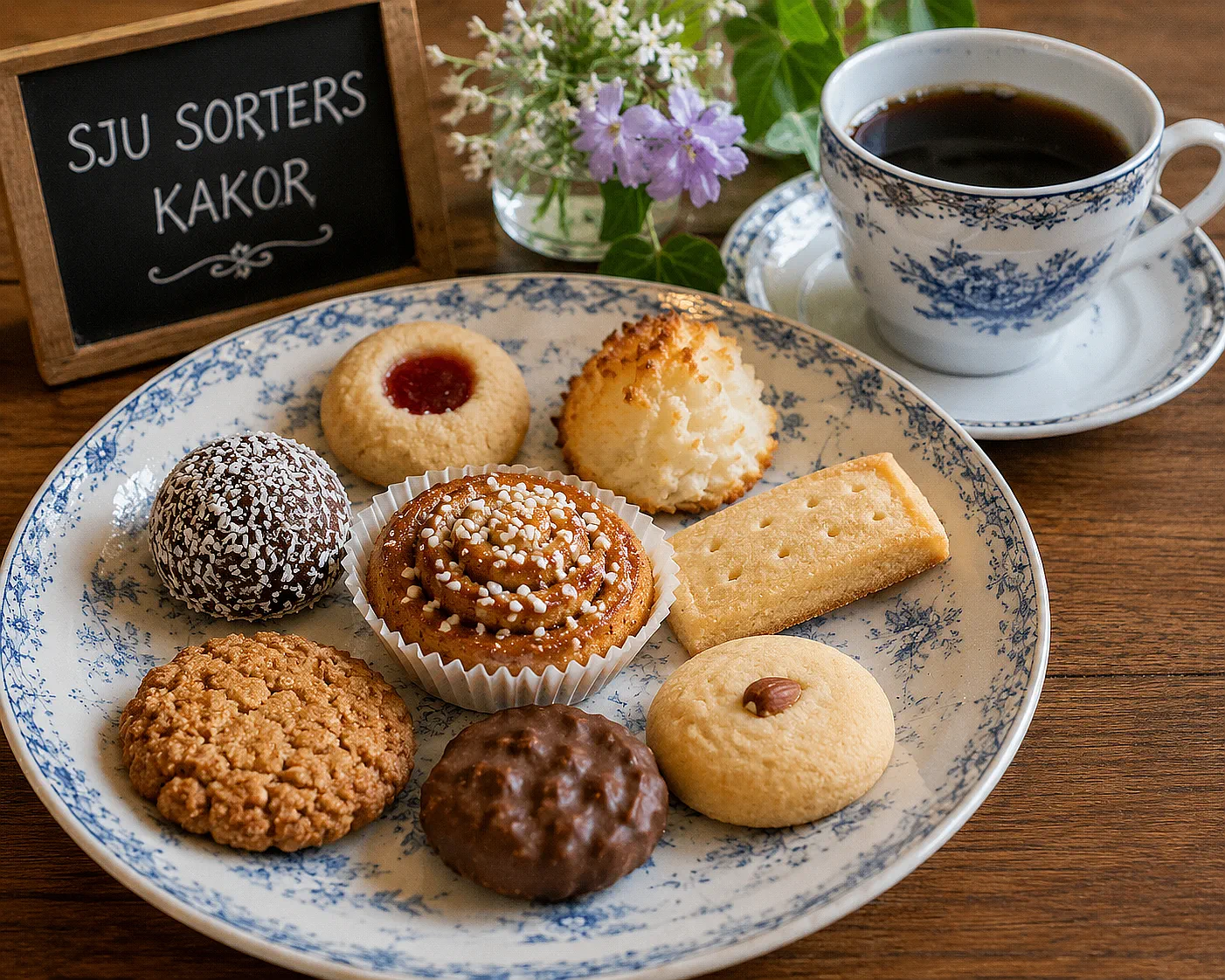
- Seven varieties of cookies was long considered the perfect number.
- Six varieties could seem stingy.
- Eight varieties could be viewed as showing off.
- Cookies were to be eaten before buns and pastries.
- Traditional coffee parties (kafferep) were more formal than modern fika.
- Today’s fika has far fewer rules — and usually fewer cookies.
A small disclaimer: it is easy to confuse fika with kafferep, the traditional Swedish coffee party.
A kafferep is actually more similar to afternoon tea. A classic kafferep typically includes coffee and seven different kinds of cookies. The exact number may vary, but there was traditionally an established order: cookies first, buns and pastries later.
Fika is different. There are no protocols to follow and no forms to fill out. People have fika because they want to relax for a moment with colleagues, friends or family. The social aspect is what truly matters and is often highlighted as a contrast to the stereotypical Nordic reserve.
The @ Symbol, the Cinnamon Bun and Everything in Between
🥐 Classic Items on a Swedish Fika Table
- Cinnamon buns
- Traditional cookies such as raspberry caves (hallongrottor), dream cookies (drömmar), checkerboard cookies and Finnish sticks
- Mazarins
- Punsch rolls
- Chocolate balls
- Coffee or tea
- Good company
Speaking of fika, there is one thing we have not mentioned yet: the cinnamon bun. Sweden’s edible equivalent of the @ symbol.
This golden-brown spiral of wheat dough, butter, sugar and cinnamon has become something of a national treasure. It even has its own annual celebration: Cinnamon Bun Day on October 4th.
Although cinnamon buns are rarely included among the traditional seven varieties of cookies served at a kafferep, they have become a natural part of many Swedish fika tables. In fact, many Swedes would argue that it is not really fika unless a cinnamon bun is within reach.
And if forced to choose, many of us would happily take a perfectly baked cinnamon bun over a cupcake any day.
As the Gospel of Matthew famously puts it:
“Man shall not live by bread alone.”
But God knows that a fika break shared with good company certainly helps.
Cafés, Bakeries and Coffee Shops in Sälen
By now you have had a taste of Swedish traditions and fika culture, and perhaps you feel that a coffee break would be appropriate. If so, you are absolutely right.
Fortunately, there are several excellent places to enjoy fika not far from our cottages in Gruven and Tangen. If you prefer to enjoy your fika in the comfort of your cabin, you can also shop locally. You will find links to nearby stores on our shopping page.
For restaurants, cafés and other places serving food and drinks, visit our food and drink guide.